Wildlife in Antarctica
An expert field guide to Antarctica’s remarkable wildlife The first thing you notice at an Antarctic landing is the noise....
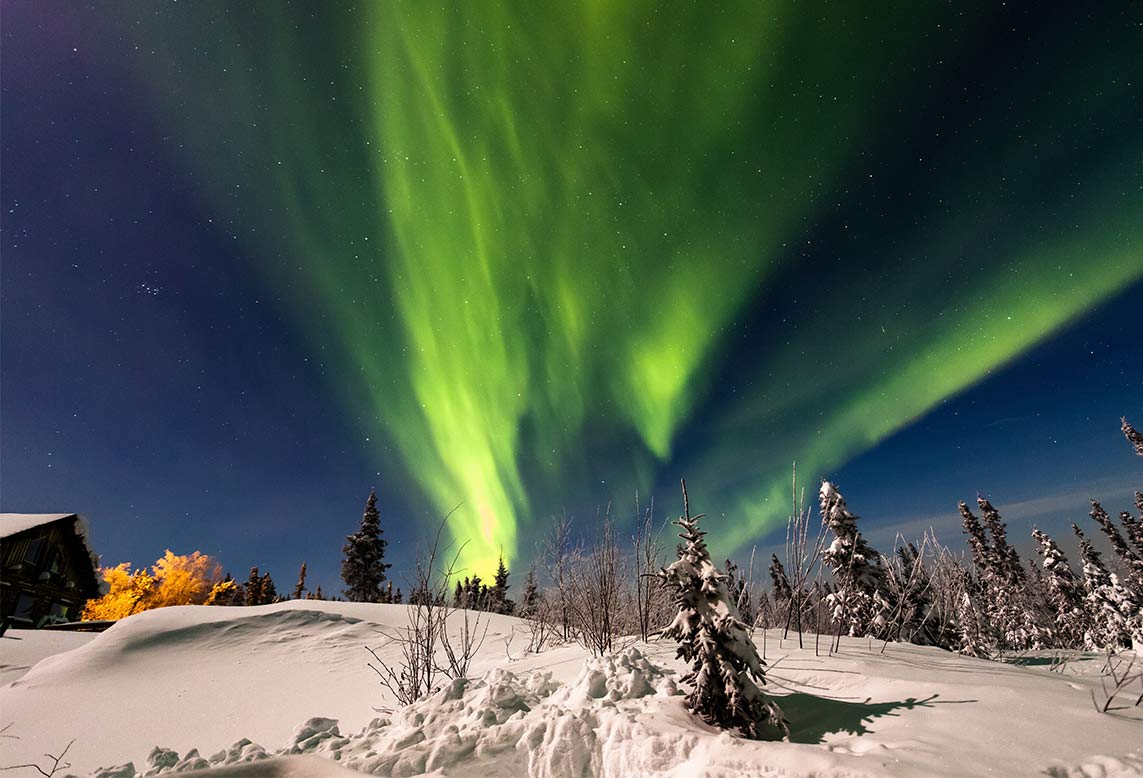
Read nowThere are certain moments in travel that permanently alter your perspective. They are not defined by the luxury of your surroundings or the distance you have crossed, but by a sudden, quiet confrontation with the sheer scale of the natural world. Standing on a frozen lake in the deep sub-Arctic night, watching the first faint ribbons of the Alaska borealis flicker to life across the stars, is precisely one of those moments.
To journey into the far north in search of the Northern Lights is unlike any other expedition. It is not a passive sightseeing trip; it is an active pursuit that demands patience, resilience, and a willingness to surrender to the unpredictable rhythms of the cosmos.
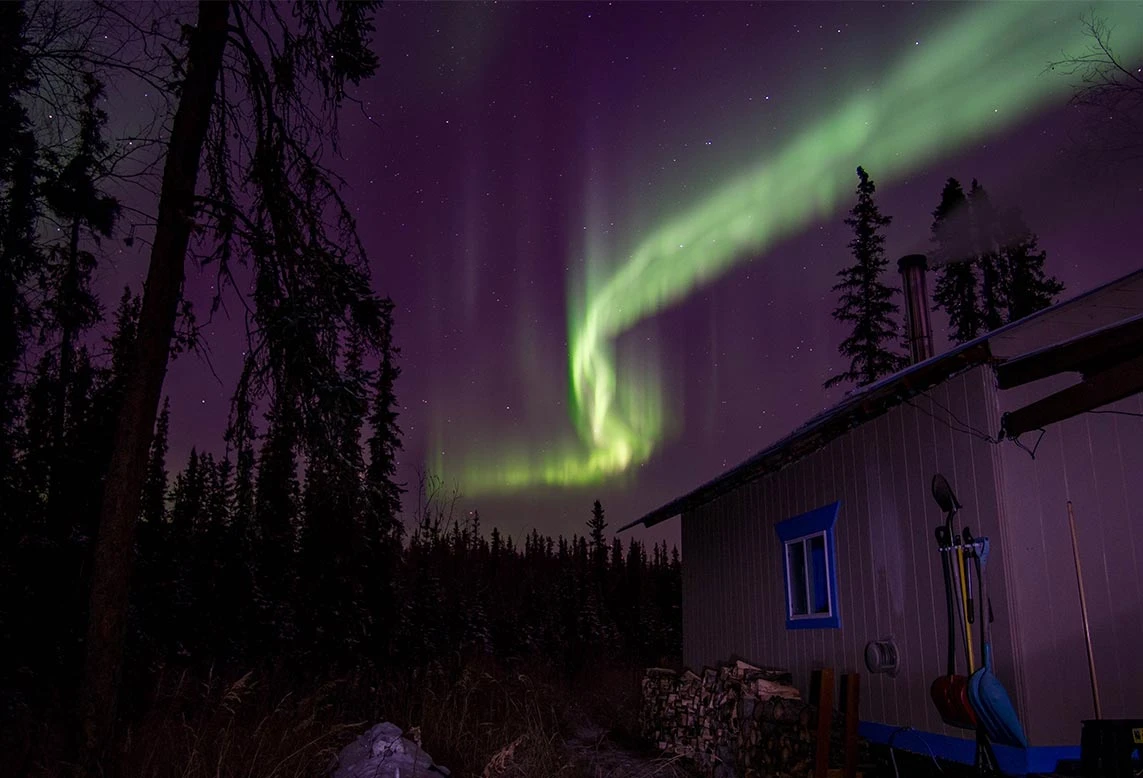
The preparation for a night under the aurora is a ritual in itself. As the cold evening light fades into a deep, velvety black, the silence of the Alaskan wilderness becomes almost absolute. Far from the ambient light pollution of modern cities, the snow-covered forests of the interior seem to hold their breath.
This profound stillness is where the emotional journey truly begins. In the modern world, we are rarely exposed to true darkness or complete silence. Waiting for the sky to awaken forces you to slow your pace, to listen to the crackle of the frost beneath your boots, and to engage with the landscape on a deeply personal level. This return to mindful, deliberate exploration is at the heart of what an expedition holiday actually is – a journey designed to restore our connection to the wild.
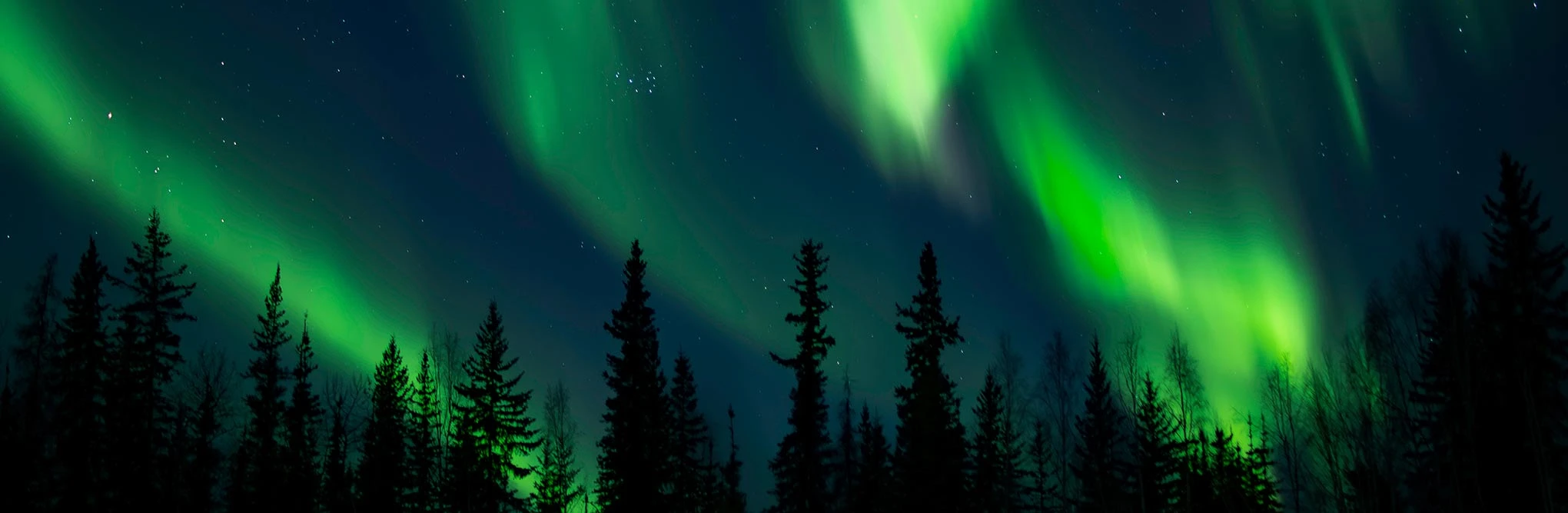
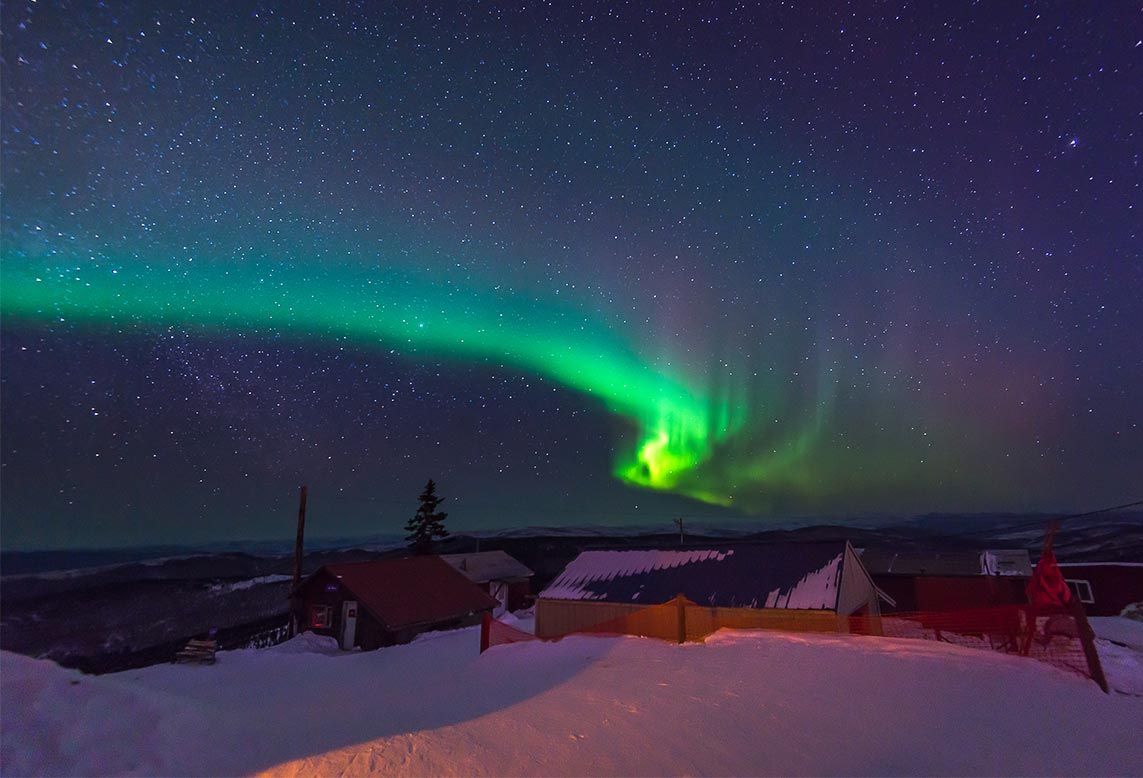
To the human eye, the beginning of the display is often subtle. A faint, pale arc of greyish-green light appears on the northern horizon, easily mistaken for a distant cloud. But as solar winds collide with the Earth’s magnetic field, the atmosphere begins to glow.
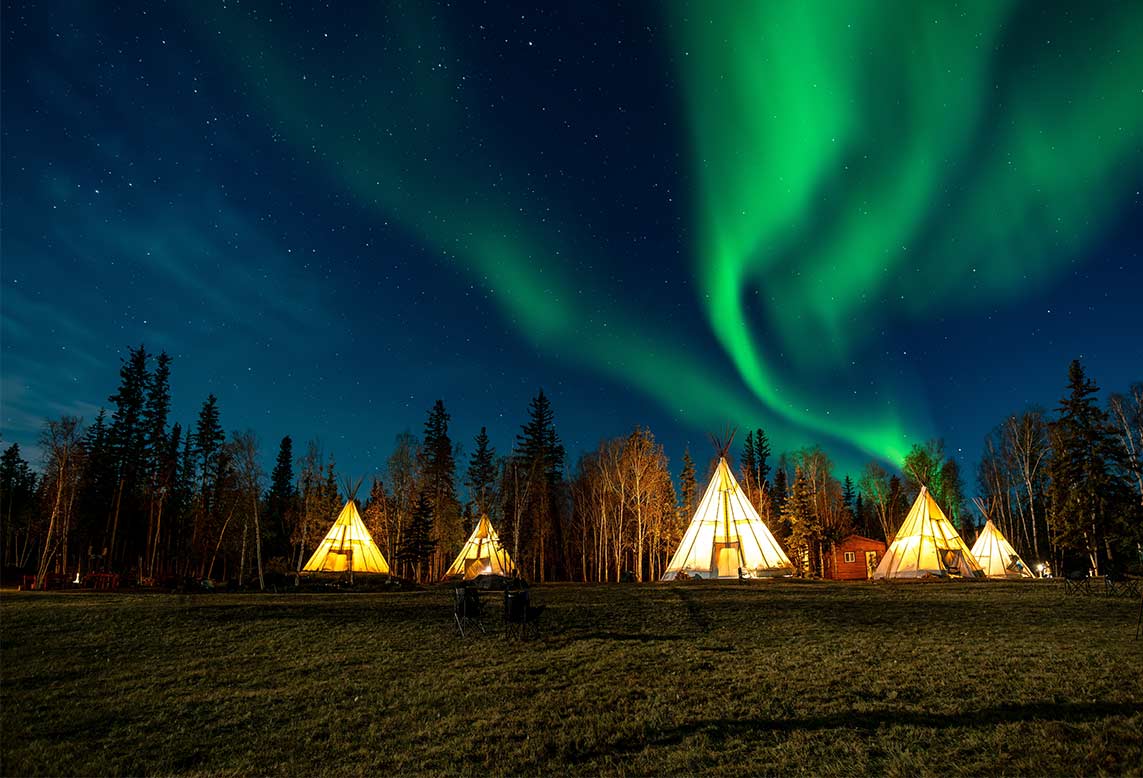
Suddenly, the pale ribbon surges. Vibrant neon greens, delicate pinks, and rare, deep purples sweep across the sky in giant, shimmering curtains. It is a spectacle of pure energy, moving with a fluid, silent grace that feels truly otherworldly.
The varying shades of the alaska borealis are determined by the specific gas particles colliding in the upper atmosphere, as well as the altitude of the impact:
To witness this cosmic collision in the vast skies of the Last Frontier is a humbling experience. It reminds us that our planet is part of a much larger, living system – a realisation that is incredibly moving when experienced in person.
Because the aurora is a natural phenomenon driven by space weather, successful viewing requires meticulous planning and local expertise. At Exclusive Expeditions, we focus on the interior regions around Fairbanks and the remote Brooks Range, where geography and climate combine to offer the clearest, most reliable skies in the Arctic Circle.
While winter brings the longest nights, the transitional shoulder seasons offer more comfortable temperatures and distinct visual advantages:
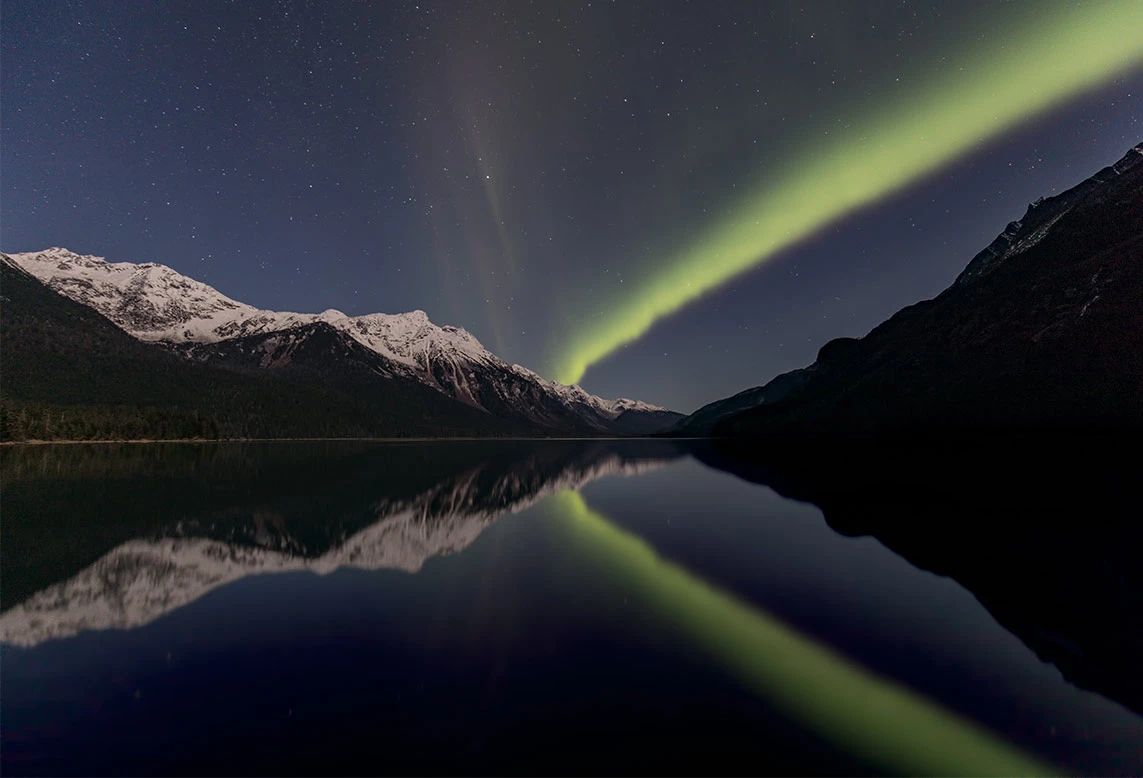
– Autumn (September to October): The weather is relatively mild, the wilderness rivers are still fluid, and the aurora is frequently reflected in open, glassy lakes before the deep freeze sets in.
– Deep winter (November to February): The landscape is entirely transformed by snow. Long, dark nights provide the maximum window of viewing opportunity, paired with classic sub-Arctic winter activities.
– Spring equinox (March to April): Historically, the weeks surrounding the March equinox (when day and night are of equal length) bring some of the most intense geomagnetic activity of the year, alongside slightly warmer daytime temperatures.
While modern camera sensors can capture the intense colours of the aurora with ease, we always advise taking a few minutes to step away from the tripod. The true impact of the borealis is not captured on a screen; it is felt in the quiet moments when you look up with your own eyes and let the scale of the sky wash over you.
Our travel designers carefully craft these journeys to balance the cold, quiet nights of sky-watching with the warmth of private, wood-fired wilderness lodges, hot springs, and exceptional local cuisine. If you are curious about how we weave these remote polar adventures into our global portfolio, explore our full list of bespoke destinations.
A journey to witness the Alaska Borealis is a deeply personal endeavour. It is a reminder that the most rewarding travel experiences cannot be hurried or bought off a shelf; they must be waited for, appreciated, and met with a sense of wonder.
At Exclusive Expeditions, we manage every detail of your sub-Arctic journey – from private wilderness transfers to seasoned local guides who understand the nuances of the northern sky – ensuring your expedition is seamless, safe, and deeply meaningful.
Are you ready to witness the dance of the northern sky? Our expert travel designers are ready to help you navigate the wild spaces of the North. Contact our team today to begin planning your bespoke Alaskan expedition.
Seeking further inspiration for your next expedition? Discover our guide on the best time to visit Patagonia, or explore our wider collection of bespoke polar regions and frozen frontiers.
Every journey we offer is handpicked by our specialist. These are the one we recommend most.
17 Nights From £7,280pp
Cruise from Vancouver through Alaska’s Inside Passage, past glaciers, fjords and wildlife-rich coasts on an elegant expedition.
View details7 Nights From £6,390pp
Sail through Alaska’s icy wilderness, witness towering glaciers, and explore pristine landscapes in unforgettable style.
View details12 Nights From £7,540pp
Cruise Alaska with Lindblad Expeditions, glide past glaciers, fjords, whales, and wildlife in untamed, breath-taking wilderness.
View detailsYour message has been submitted successfully.
Ready to start planning? Our specialists are here to help.
An expert field guide to Antarctica’s remarkable wildlife The first thing you notice at an Antarctic landing is the noise....
Read nowChiang Mai city guide: Ancient temples, mountain sanctuaries & Lanna culture Tucked into the misty mountains of Northern Thailand, Chiang...
Read nowVietnam Weather in February: Regional Climates, Ideal Seasons & Travel Advice Pack a jacket for Hanoi and sunscreen for Ho...
Read nowA single small island holds all of this: the world's densest population of leopards, herds of wild elephants numbering in...
Read nowGuided Safaris in Mikumi National Park: Exploring Tanzania's Southern Wilderness Four and a half hours west of Dar es Salaam,...
Read nowWhere to travel in December: The best global destinations for winter expeditions December carries a unique energy for global exploration....
Read nowAn expert field guide to Antarctica’s remarkable wildlife The first thing you notice at an Antarctic landing is the noise....
Read nowChiang Mai city guide: Ancient temples, mountain sanctuaries & Lanna culture Tucked into the misty mountains of Northern Thailand, Chiang...
Read nowVietnam Weather in February: Regional Climates, Ideal Seasons & Travel Advice Pack a jacket for Hanoi and sunscreen for Ho...
Read nowA single small island holds all of this: the world's densest population of leopards, herds of wild elephants numbering in...
Read nowGuided Safaris in Mikumi National Park: Exploring Tanzania's Southern Wilderness Four and a half hours west of Dar es Salaam,...
Read nowWhere to travel in December: The best global destinations for winter expeditions December carries a unique energy for global exploration....
Read now